LLM vs Embodied AI: Understanding the Key Differences
AI is rapidly evolving, creating new approaches to creating systems that can perceive information, analyze it, and interact with the environment. Among the most important achievements in recent years, large language models and Embodied AI have attracted special attention.
As the role of AI in business, industry, and everyday life grows, it is increasingly important to understand the differences between these two areas.
What is LLM
Large language models are a type of AI designed to understand, analyze, and generate natural language text. They are trained on vast amounts of text data, which allows them to recognize language patterns, context, and relationships between words and concepts.
The basis of LLM work is the Transformer architecture, which allows you to efficiently process large amounts of information and to take context into account when generating a response. When interacting with a user, the model does not look up ready-made answers in the database; instead, it predicts the most likely sequence of words based on the received query and the knowledge acquired during training.
Thanks to this, LLMs can perform a wide range of tasks: from conducting dialogues and creating content to translating texts, writing software code, analyzing documents, and supporting decision-making. Modern language models are used in virtual assistants, search engines, corporate chatbots, automation tools, and many other digital products.

What is embodied AI
Embodied AI is a branch of AI that integrates intelligent algorithms with physical systems that interact with their environment. Embodied AI empowers machines to perceive the world through sensors, analyze the data, and perform real-time actions.
Such systems combine several technologies: computer vision, machine learning, sensor data processing, motion planning, and real-time decision-making. This enables robots and autonomous devices to navigate in space, recognize objects, avoid obstacles, and perform tasks even in complex, dynamic environments.
One key aspect of embodied AI is learning through interaction with the environment. For example, a robot can learn to grasp objects of different shapes, adjusting its movements after each attempt, or an autonomous car can adapt to changes in the traffic situation in real time.
Embodied AI is actively used in robotics, logistics, industrial production, medicine, and transportation. Warehouse robots automate the movement of goods, service robots assist people in everyday life and in the service sector, and autonomous vehicles operate independently without human intervention.
Key differences between LLM and embodied AI
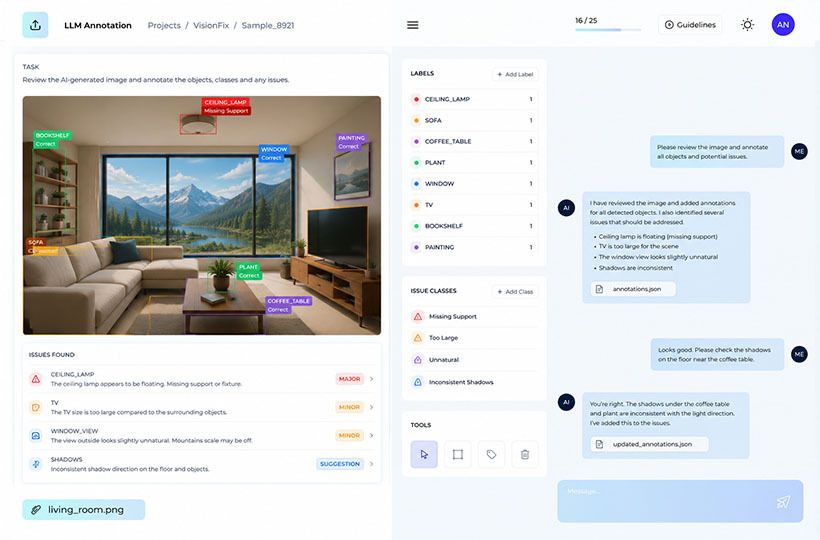
One of the main differences is the type of data these systems work with. LLMs analyze mostly textual information and are trained on large datasets of documents, web pages, books, and dialogues. Embodied AI, on the other hand, relies on data from cameras, lidars, microphones, motion sensors, and other sensors to perceive the environment in real time.
The ways in which they interact with the user and the environment also differ. LLMs communicate through text or voice, generating responses to queries and performing intelligent tasks. Embodied AI interacts through physical actions, such as moving, manipulating objects, navigating in space, or controlling equipment.
Is LLM part of Embodied AI
At first glance, it may seem that LLMs and Embodied AI are two separate, independent technologies. However, as modern AI systems develop, the line between them is gradually blurring. Increasingly, large language models are used as an intelligent control layer for robots and autonomous agents, enabling them to understand human language, interpret complex instructions,, and plan a sequence of actions.
In traditional robotic systems, commands are usually issued in advance or generated by specialized algorithms. The integration of LLM allows for a more natural interaction. For example, instead of programming a specific scenario, the user can simply tell the robot: “Bring me a cup from the kitchen table”, and the system will independently break this task into separate steps, find the desired object, and execute the command.
Embodied AI provides perception of the physical world through cameras and sensors, as well as the implementation of actions using robotic mechanisms. Only the combination of these components allows the system not only to understand commands, but also to execute them in a real environment.
In the future, such agents may find applications in home robotics, industry, medicine, logistics, and other areas where both cognitive flexibility and physical interaction with the surrounding world are required.
FAQ
What is the difference between LLM and Embodied AI?
The key distinction in an AI comparison lies in the environments in which these technologies operate. LLMs focus on processing and generating language in digital spaces, while Embodied AI combines intelligence with physical systems that can interact with the real world.
What is Embodied AI?
Embodied AI refers to artificial intelligence integrated into physical agents such as robots, drones, or autonomous vehicles. These systems use sensors, perception, and decision-making capabilities to navigate and act within their environments.
What is embodied intelligence?
Embodied intelligence describes an AI system's ability to learn, adapt, and make decisions through interaction with the physical world. It combines perception, action, and feedback to improve performance over time.
What role do LLMs play in robotics AI?
In the context of LLM vs robotics AI, language models often provide reasoning, planning, and communication capabilities. Robotics AI handles perception, navigation, and physical execution of tasks in real-world environments.
What types of data do LLMs and Embodied AI use?
LLMs primarily rely on text-based datasets, including books, articles, websites, and conversations. Embodied AI processes sensor data such as images, video streams, depth information, and environmental measurements.
What are common applications of LLMs?
LLMs are widely used in conversational assistants, content generation platforms, translation services, customer support systems, and software development tools. Their strength lies in understanding and generating natural language.
What are common applications of Embodied AI?
Embodied AI is used in autonomous vehicles, industrial automation, warehouse robotics, healthcare assistance, and service robotics. These applications require continuous interaction with dynamic physical environments.
Why is the AI comparison between LLM and Embodied AI important?
Understanding the differences between these technologies helps organizations choose the most suitable solution for specific tasks. The comparison also highlights how language intelligence and physical intelligence address different challenges.
What trends are shaping the future of LLM vs robotics AI?
Current developments focus on integrating language models with robotic systems to improve communication, planning, and autonomy. This convergence is driving the emergence of more capable AI agents that can operate across digital and physical domains.
What is the relationship between LLMs and embodied intelligence?
LLMs contribute advanced language understanding and reasoning, while embodied intelligence enables perception and action in the physical world. Together, these capabilities create AI systems that can both interpret information and interact with their surroundings.