Embodied AI Datasets
As AI moves beyond text and static images into the physical world, embodied datasets are becoming increasingly important. These datasets enable systems to operate and learn in real-world environments.
Embodied AI relies on multimodal data that reflects how agents perceive the world through sensors and actions. In this article, we explore what embodied datasets are, why they matter, and how they are shaping the future of next-generation AI systems.
Quick Take
- Embodied data sets capture interactions between agents and environments.
- They combine multimodal data sets with action and time data.
- Robotics datasets and sensor-fusion data are central to embodied AI.
- Annotation and data collection are complex but important processes.
- Embodied data will drive the next generation of AI systems.

What are embodied datasets?
Embodied datasets are structured collections of data that capture the interaction between an agent (e.g., a robot or autonomous system) and its environment. Embodied datasets include context, motion, and action.
These datasets combine multiple data streams:
- Visual input (images, video).
- Depth and spatial data (LiDAR, 3D point clouds).
- Sensor metrics (IMU, GPS, radar).
- Action trajectories (motion, manipulation).
- Environmental context (scene layout, object relationships).
This makes embodied AI datasets fundamentally multimodal, with different types of information aligned across time and space.
Why embodied AI needs a new data paradigm
Traditional machine learning models are trained on static datasets, but real intelligence requires systems to:
- Understand dynamic environments.
- Make decisions based on context.
- Interact physically with objects.
Embodied AI introduces feedback loops between perception and action. A robot sees an object and moves towards it, manipulates it, and adapts based on the result.
This creates new requirements for robotics datasets:
- Temporal consistency. The data must capture sequences over time.
- Spatial accuracy. Accurate 3D representation of environments.
- Action labeling - a clear mapping between perception and behavior.
- Cross-modal alignment. Synchronization across sensors.
Without these properties, models cannot generalize to real-world environments.
Key components of embodied datasets
At the core of embodied datasets is the integration of multiple data modalities. This includes combining:
1. Multimodal data integration
Together, they enable robust perception.
2. Action and trajectory annotation
Unlike traditional datasets, embodied AI datasets must contain actions.
This includes labeling:
- Robot trajectories.
- Grasp points and manipulation paths.
- Use of tools and interaction sequences.
These annotations help models understand what the world looks like and how to act in it.
3. Modeling environment and context
Embodied datasets must capture the complete environment, not just objects.
This includes:
- Scene layout.
- Relationships between objects.
- Physical constraints.
For example, understanding that a cup is on a table and that the table supports a cup is important for reasoning and planning.
4. Temporal Dynamics
Time is a dimension in embodied AI.
Datasets must represent:
- Action sequences.
- Changes in the environment.
- Cause and effect relationships.
This allows models to learn dynamics, for example, to predict what will happen after an action is performed.
Applications of embodied datasets
In robotics, embodied AI datasets are needed to teach machines to interact with the physical world. They capture complex sequences of perceptions and actions, allowing robots to perform tasks such as manipulating, navigating, and processing objects. Modern robotics datasets include scenarios such as bimanual manipulation, tool use, and human-robot interaction. By learning from this type of data, robots can operate in unstructured environments such as homes, warehouses, and industrial facilities.
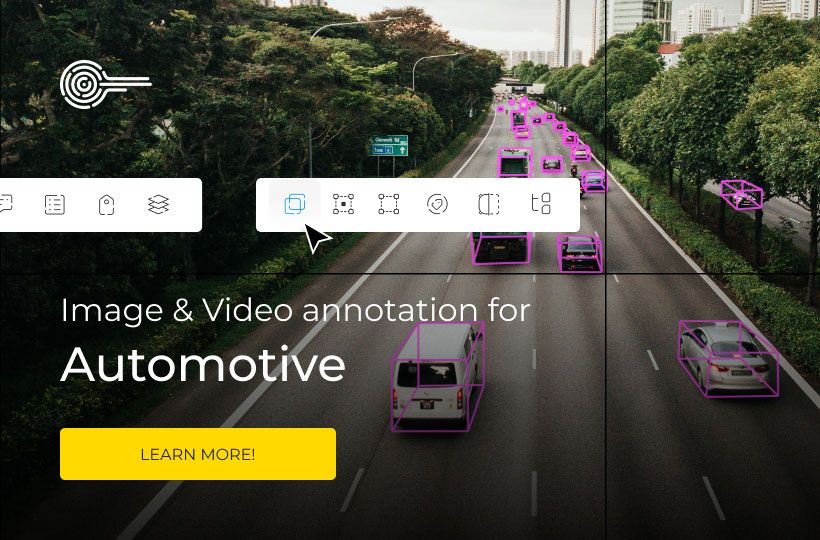
In the field of autonomous vehicles, embodied datasets are used to build robust perception and decision-making systems. Autonomous driving systems must interpret the dynamic road environment, detect and classify objects, and predict the behavior of other agents such as pedestrians and vehicles. They must also make real-time driving decisions based on this understanding. This is where sensor fusion data becomes important, as it combines inputs from cameras, LiDAR, and radar to create a comprehensive representation of the environment. This multimodal approach enhances reliability and safety in real-world driving. In augmented reality (AR), virtual reality (VR), and spatial computing applications, embodied datasets allow systems to understand and interact with 3D environments. These datasets support spatial mapping, object recognition, and realistic interaction in digital or mixed environments. As a result, they are used in applications such as gaming, simulation-based learning, and remote collaboration. With multimodal datasets, these systems can provide adaptive user experiences.
Challenges of building embodied AI datasets
Building embodied AI datasets is more challenging than working with traditional data types like text or images. These datasets require synchronized multimodal data, accurate annotations, and scalable infrastructure, making development and maintenance resource-intensive. Let’s take a look at the key challenges organizations face when working with embodied AI data.
Trends in embodied AI data
As embodied AI continues to evolve, new approaches are emerging to improve scalability, generalization, and data quality. Below are the trends shaping embodied datasets, along with practices for building data pipelines.
Best practices for building embodied datasets
- Design for multimodality. Ensure that datasets contain synchronized inputs from multiple sensors.
- Prioritize quality over quantity. High-quality annotations are more valuable than large volumes of noisy data.
- Build scalable pipelines. Use automation and AI tools to process large datasets efficiently.
- Accommodate real-world diversity. Include diverse environments, conditions, and scenarios to improve generalization.
FAQ
What are embodied AI datasets?
Embodied AI datasets include multimodal data and action information that reflect agents' interactions with the physical environment.
How are robotics datasets different from traditional datasets?
They include temporal, spatial, and action-based data, rather than static inputs.
Why is sensor fusion data important?
They combine inputs from multiple sensors to create an accurate understanding of the environment.
What are multimodal datasets?
Datasets that contain different types of data, such as images, audio, and sensor signals.
What is the biggest challenge with embodied AI datasets?
The main challenges are scalability and annotation complexity.